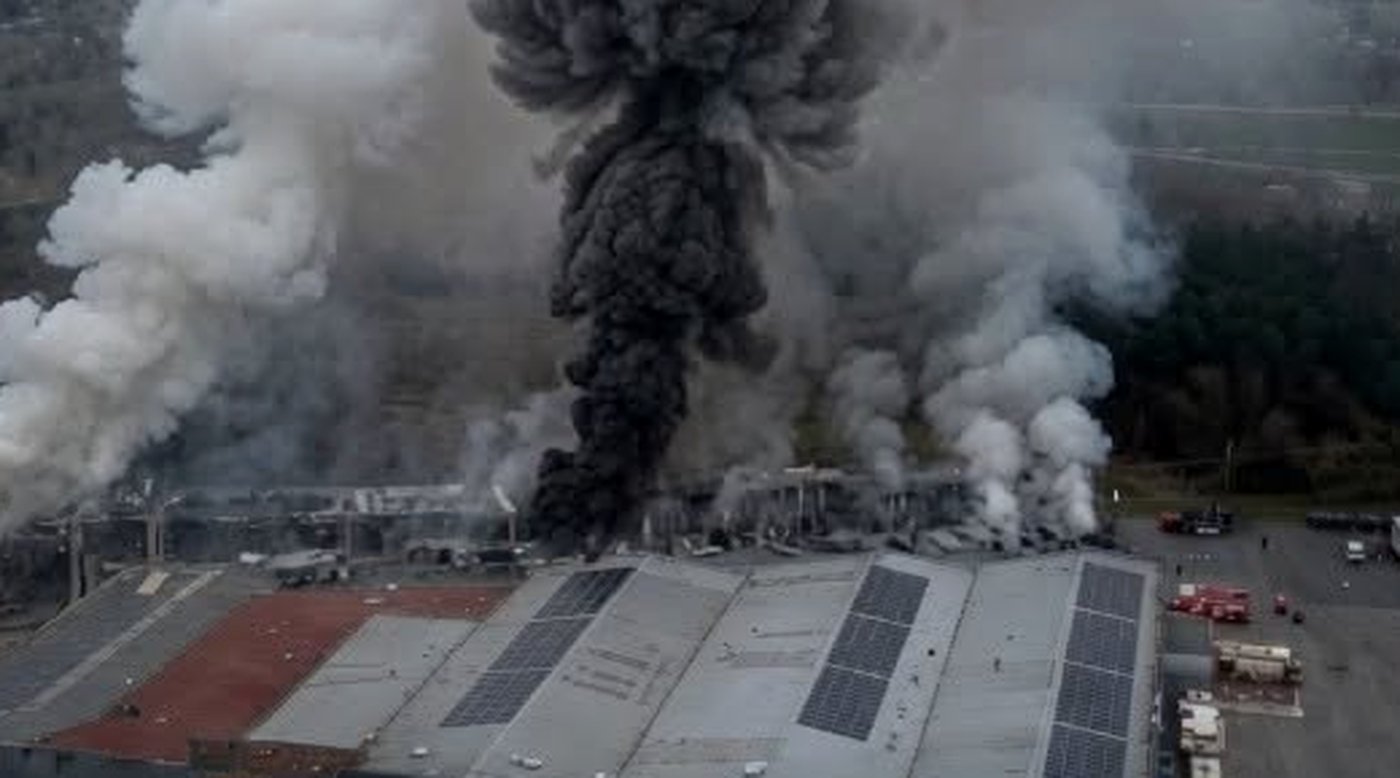
🚨BREAKING NEWS : A major fire broke out in
Industrial Tragedy in Central Greece: A Deep Analysis of the Fatal Violanta Factory Fire
In the early hours of a quiet morning
a catastrophic industrial fire erupted at a major biscuit manufacturing facility near the central Greek city of Trikala, resulting in a profound tragedy that has claimed the lives of four women. The incident, which occurred at the Violanta factory complex, has sent shockwaves through the region and prompted an immediate and massive response from national emergency services. Greece, a nation with stringent industrial safety standards, now faces a period of mourning and a rigorous investigation into the circumstances that led to such a significant loss of life in the workplace. The timeline of the disaster began around 4:00 a. m. at the production site located approximately 200 miles north of Athens. At the time the blaze was detected, 13 employees were working the overnight shift, a common practice in high-capacity food manufacturing environments. While eight individuals were able to successfully navigate the evacuation protocols and escape the burning structure, four women were unfortunately trapped. Their bodies were later recovered by specialized crews from the Hellenic Fire Service after the intense flames were brought under control. One additional worker was the subject of an intense search operation before the final casualty count was confirmed by local authorities. The physical scale of the response reflected the severity of the emergency.
Approximately 40 firefighters and a fleet of 15 vehicles were dispatched to the Trikala site, battling not only the flames but also the thick, acrid smoke that blanketed the industrial zone. Firefighters reported that the blaze had compromised the structural integrity of the factory roof, creating a hazardous environment for rescue operations. Beyond the fatalities, the fire resulted in the hospitalization of seven people, including a member of the emergency response team who sustained injuries while attempting to secure the premises. Medical facilities in the region have focused on providing urgent care to these survivors, though specific clinical details remain confidential. In the immediate aftermath, Violanta, the company responsible for the facility, issued a formal public statement expressing deep sorrow and extending condolences to the families of the deceased. The company, which is a significant employer in the Trikala region, has pledged its full cooperation with the Fire Department and other competent state authorities. Their management emphasized that their primary focus is currently on supporting the affected families and ensuring that the survivors receive the psychological and logistical assistance necessary to cope with the trauma of the event.
The company has also committed to absolute transparency as the investigation into the fire’s origin proceeds. The cause of the inferno remains the central question for investigators. While early witness accounts shared with local media suggested that a loud explosion preceded the fire, official sources have remained cautious, refusing to confirm whether an explosion was the primary cause or a secondary consequence of the heat. Forensic teams are expected to conduct a comprehensive review of the facility’s machinery, electrical infrastructure, and production lines. Notably, workers have indicated to investigators that no gas cylinders were stored in the immediate vicinity of the fire’s starting point, a detail that shifts the focus toward electrical malfunctions or mechanical failures within the automated biscuit-making equipment. Industrial safety in Greece is governed by a framework of European Union directives designed to mitigate risks in high-heat and high-voltage environments. Food manufacturing plants, such as the one operated by Violanta, often deal with unique hazards, including the potential for combustible dust—such as flour or sugar—which can ignite under specific conditions.
As part of the ongoing inquiry, safety inspectors will review maintenance logs, fire suppression system records, and recent compliance audits to determine if any lapses contributed to the rapid spread of the fire. The success of eight workers in evacuating suggests that some safety drills were effective, yet the four deaths indicate a critical failure in the emergency exit accessibility or the speed of the fire’s progression. The impact on the local community of Trikala cannot be overstated. Industrial hubs often serve as the economic backbone of regional Greek cities, and a disaster of this magnitude affects the social fabric of the entire area. Local municipal leaders have expressed their solidarity with the victims’ families, and regional services are coordinating support resources. At the national level, news agencies including Reuters have provided consistent coverage, highlighting the event as a significant workplace safety incident that may lead to renewed scrutiny of industrial protocols across the country. Looking forward, the site of the Violanta factory will undergo a detailed technical and forensic review. This process involves structural engineers assessing whether the building can be salvaged and safety experts identifying the precise sequence of events. The European Union labor frameworks will also play a role in ensuring that the families of the victims are provided with the financial and legal support mandated for workplace fatalities. As Greece waits for the final reports from the Hellenic Fire Service, the tragedy serves as a somber reminder of the inherent risks in industrial labor and the vital importance of constant vigilance in workplace safety.