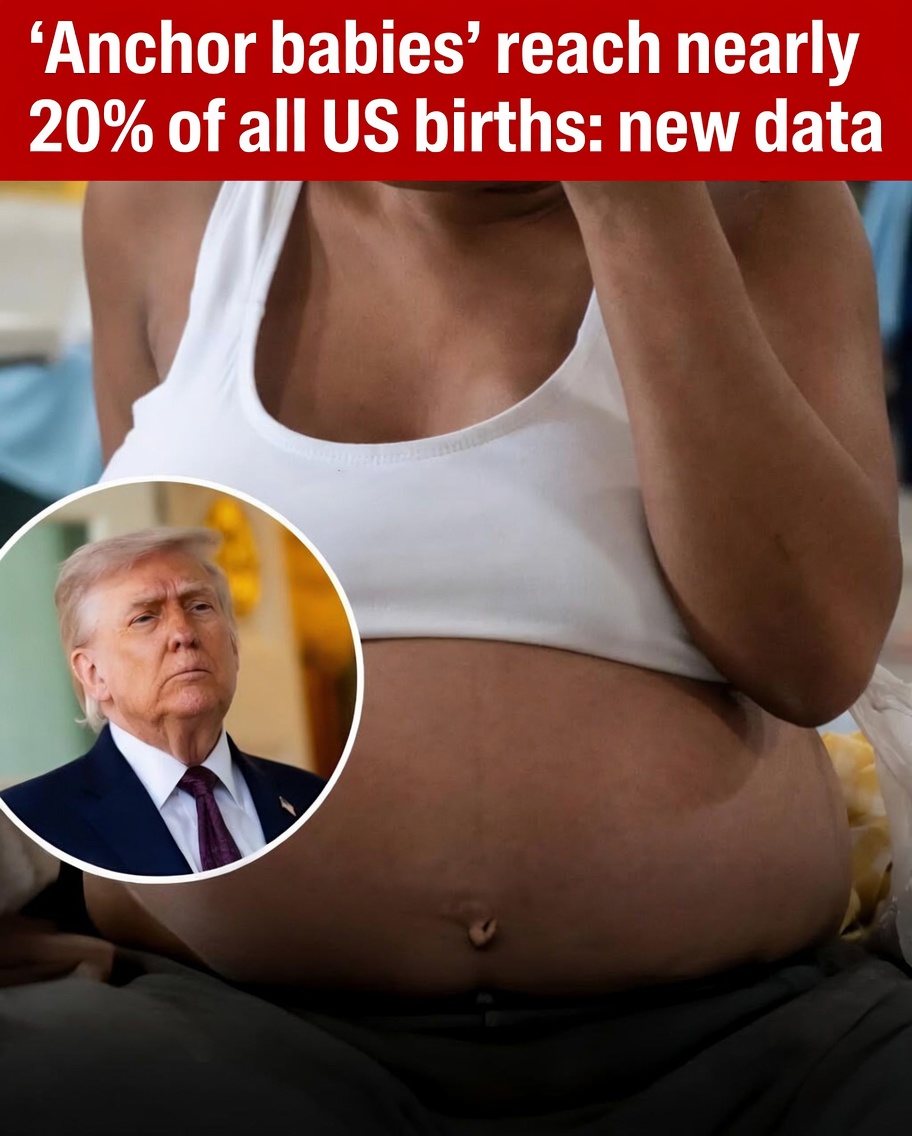
A recent report claims that children born in the United States to non-citizen parents—often referred to in political debates as “anchor babies”—now make up a significant portion of total births. According to the new data, these births account for nearly 20% of all U.S. births, marking a notable increase compared to previous years.
The report estimates that hundreds of thousands of babies are born annually to mothers who are either in the country without legal status or are residing temporarily, such as on visas. A large share of these births is attributed to unauthorized immigrants, while others involve mixed-status families or temporary residents.
This trend has reignited debate over birthright citizenship, a policy established under the 14th Amendment to the United States Constitution, which grants citizenship to nearly all individuals born on U.S. soil. Critics argue that the system may encourage immigration for the purpose of securing citizenship for children, while supporters maintain there is limited evidence that this is a primary motivation for migration.
The issue remains politically sensitive, with policymakers, legal experts, and advocacy groups divided. Ongoing discussions and potential legal challenges could influence how birthright citizenship is interpreted or applied in the future.