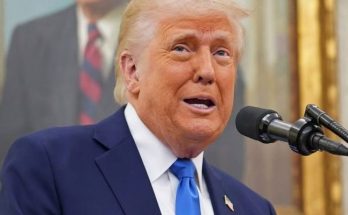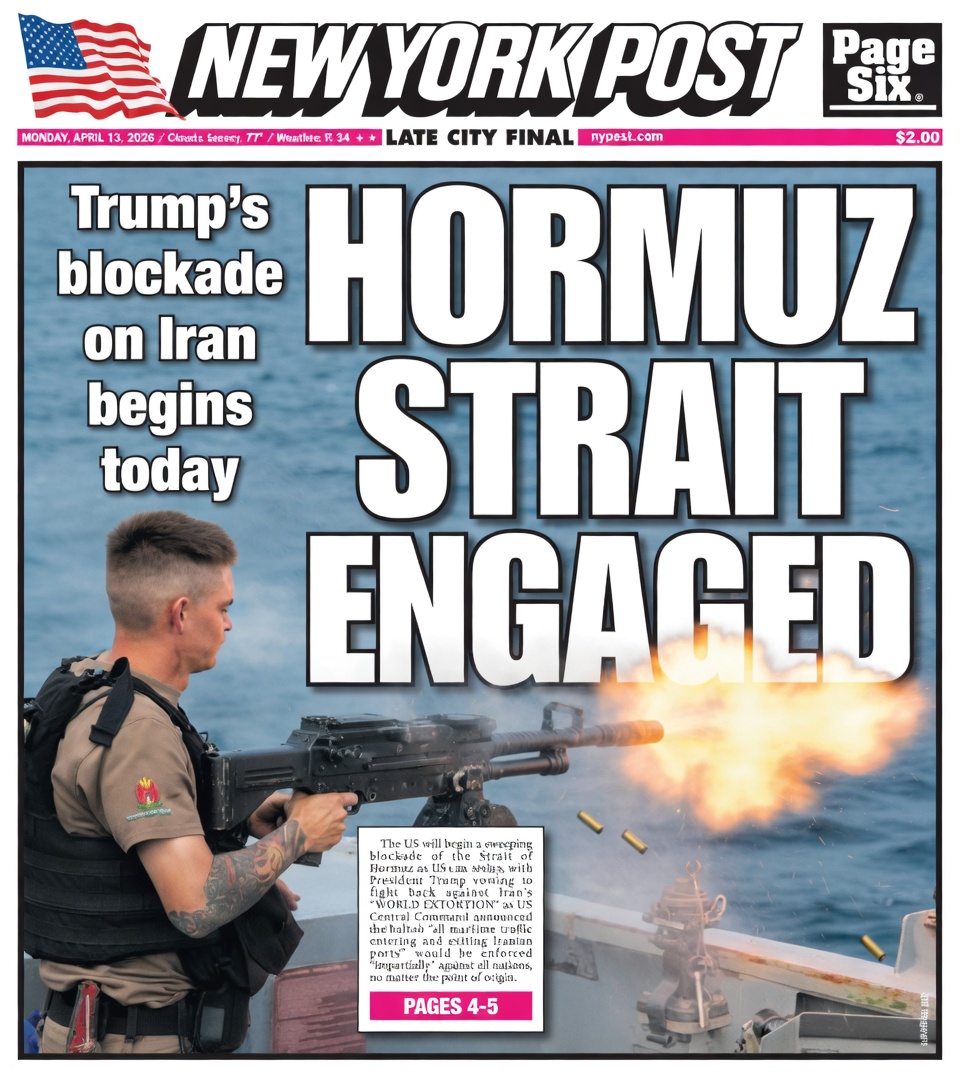
President Donald Trump announced that the United States will initiate a sweeping naval blockade of the Strait of Hormuz, escalating tensions with Iran following stalled negotiations over its nuclear program. The operation, set to begin Monday morning, is aimed at preventing any vessels from entering or leaving Iranian ports, while allowing transit to and from non-Iranian destinations to continue.
According to U.S. Central Command, the blockade will be enforced “impartially” across all nations. Trump framed the move as a response to what he called Iran’s “world extortion,” accusing Tehran of threatening global shipping by claiming to have planted naval mines in the strait and attempting to impose tolls on oil shipments. The president emphasized that no vessel paying such tolls would be granted safe passage and declared that the U.S. Navy would act decisively to secure the waterway.
The Strait of Hormuz is one of the world’s most critical energy chokepoints, historically carrying over a fifth of global seaborne oil. Disruptions in the region have significant implications for global markets and energy security. U.S. officials say Iran has used drones, missiles, and the threat of mines to deter commercial traffic, while also seeking revenue through toll collection as it attempts to rebuild following recent military conflict.
Trump’s announcement followed a round of high-level negotiations with Iranian officials that ended without a comprehensive agreement. While he described the talks as productive in some respects, he stressed that Iran’s refusal to halt its nuclear program remained the central obstacle. U.S. demands reportedly included ending uranium enrichment, dismantling nuclear facilities, recovering stored enriched material, halting support for proxy groups, and ensuring unrestricted maritime access through the strait.
In parallel with the blockade, Trump ordered the deployment of minesweepers to remove suspected Iranian naval mines and warned that any hostile action by Iranian vessels would be met with overwhelming force. He also suggested that additional military measures could follow if tensions continue to escalate.
Iran responded swiftly, condemning the blockade as a violation of a fragile ceasefire and warning of a “strong and forceful” reaction to U.S. military presence in the waterway. Iranian officials insisted they retain full control over the strait and maintained that it remains open to non-military shipping under regulated conditions.
The situation has drawn international concern. The United Kingdom and other allies are working to form a coalition focused on maintaining freedom of navigation, though they have indicated they will not participate directly in the blockade. Global leaders are closely monitoring developments, given the potential economic and geopolitical consequences.
As tensions rise, the unfolding situation in the Strait of Hormuz underscores the fragile balance between military strategy, energy security, and international diplomacy, with the risk of broader regional escalation remaining high.