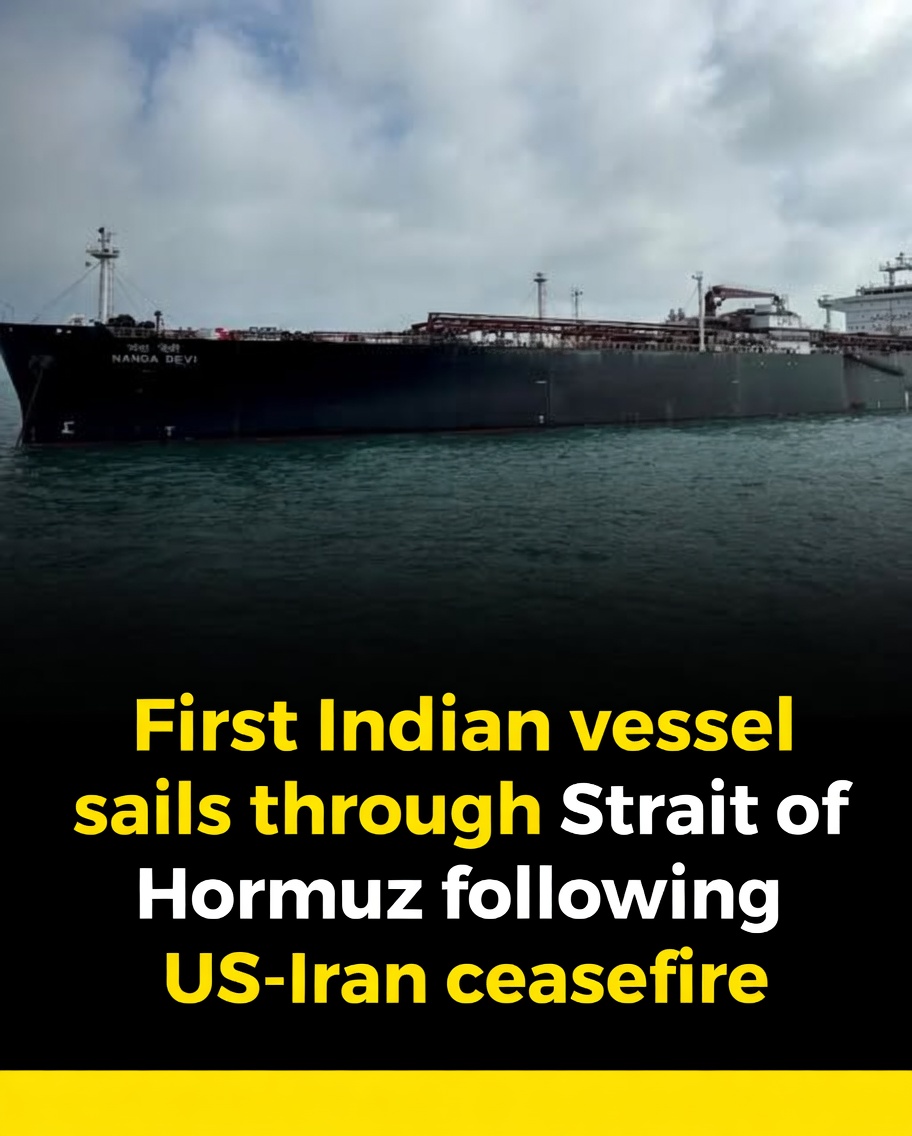
An India-flagged liquefied petroleum gas (LPG) tanker, Jag Vikram, has successfully crossed the strategically vital Strait of Hormuz, marking a significant step toward restoring maritime activity following the recent temporary ceasefire between the United States and Iran. The vessel’s safe transit signals cautious progress after weeks of disruption that had severely impacted global shipping and energy supply routes.
According to government officials, Jag Vikram traveled through the strait between Friday night and Saturday morning. By Saturday afternoon, it had reached the Gulf of Oman and continued eastward on its journey. In an official statement, authorities confirmed that the tanker is carrying approximately 20,400 tonnes of LPG cargo and has a crew of 24 seafarers onboard. The vessel is expected to arrive in Mumbai on April 15, 2026.
Owned by Great Eastern Shipping Company, Jag Vikram is a mid-sized gas carrier with a deadweight capacity exceeding 26,000 tonnes. Its successful passage is particularly notable as it is the first Indian vessel to navigate the strait since the ceasefire was announced, highlighting a potential easing of tensions in a region critical to global trade.
The transit comes after a prolonged period of instability in the Persian Gulf region, during which maritime movement was significantly restricted. Jag Vikram is the ninth Indian vessel to exit the Persian Gulf since early March. However, challenges remain, as approximately 15 India-flagged ships are still in the region awaiting safe passage. At the height of the conflict, at least 28 Indian vessels were present near the Strait of Hormuz, with the majority positioned on the western side.
Data from MarineTraffic indicates that hundreds of vessels remain in the including 426 tankers, 34 LPG carriers, and 19 LNG vessels. Many of these ships were effectively stranded due to security concerns during the conflict. Additionally, several foreign-flagged vessels carrying cargo bound for India have yet to leave the Persian Gulf, underscoring the broader impact on international shipping.
Despite these challenges, the Indian government reported that port operations across the country remain stable, with no congestion issues. Authorities emphasized that the Ministry of Ports, Shipping and Waterways is working closely with the Ministry of External Affairs, Indian diplomatic missions, and maritime stakeholders to ensure the safety of seafarers and the continuity of operations.
The situation highlights India’s vulnerability to disruptions in global energy supply chains. The country imports approximately 88 percent of its crude oil, around half of its natural gas, and nearly 60 percent of its LPG requirements. A significant portion of these imports originates from Gulf countries and must pass through the Strait of Hormuz, making it one of the most critical energy corridors in the world.
More than half of India’s crude oil imports, about 40 percent of its natural gas, and up to 85–90 percent of its LPG shipments transit through this narrow passage. The recent reopening, even partially, is therefore a crucial development, offering some to energy markets and signaling the possibility of gradual normalization in one of the world’s most important maritime routes.