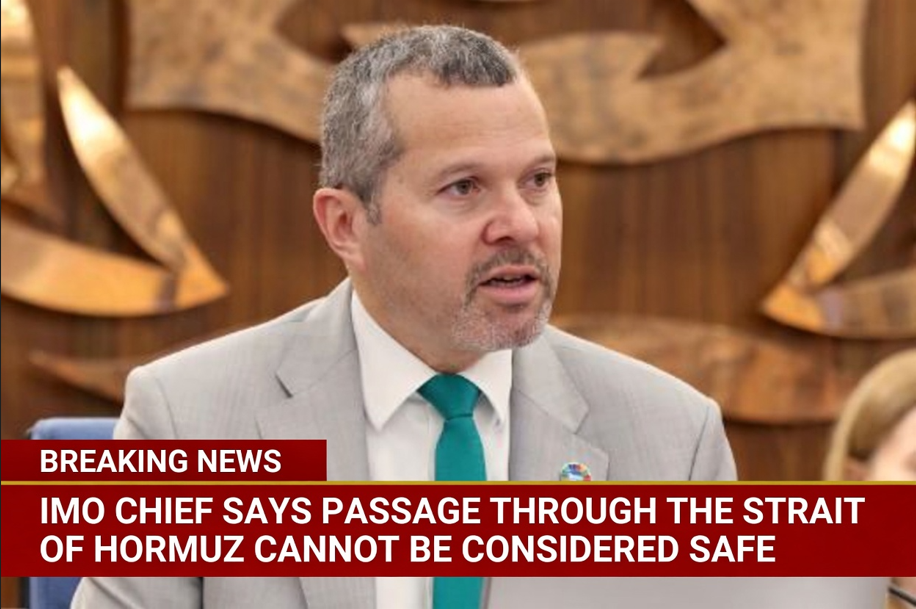
The head of the International Maritime Organization has warned that passage through the Strait of Hormuz cannot currently be considered safe, highlighting growing concerns over maritime security in one of the world’s most critical shipping routes. The statement comes amid heightened regional tensions, where recent developments have raised fears about the safety of commercial vessels navigating the narrow but strategically vital corridor.
The Strait of Hormuz serves as a key artery for global energy supplies, with a significant portion of the world’s oil and gas shipments passing through it each day. Any disruption or perceived risk in this area can have immediate consequences for international trade and energy markets. The IMO chief’s warning reflects the uncertainty facing shipping companies and governments as they assess whether it is safe to continue normal operations in the region.
Recent reports of military activity, threats, and the possible presence of sea mines have contributed to the growing sense of instability. Even with some claims of de-escalation efforts, the lack of clear verification has made it difficult to guarantee secure passage. As a result, shipping firms may be forced to take additional precautions, including rerouting vessels or increasing security measures, which could lead to higher costs and delays.
The IMO, as the United Nations agency responsible for regulating shipping, plays a crucial role in monitoring such risks and advising the global maritime community. Its assessment carries significant weight, influencing decisions made by governments, insurers, and commercial operators.
Overall, the warning underscores the fragile situation in the region. Until tensions ease and safety can be assured, the Strait of Hormuz will remain a point of concern for global trade and maritime security.