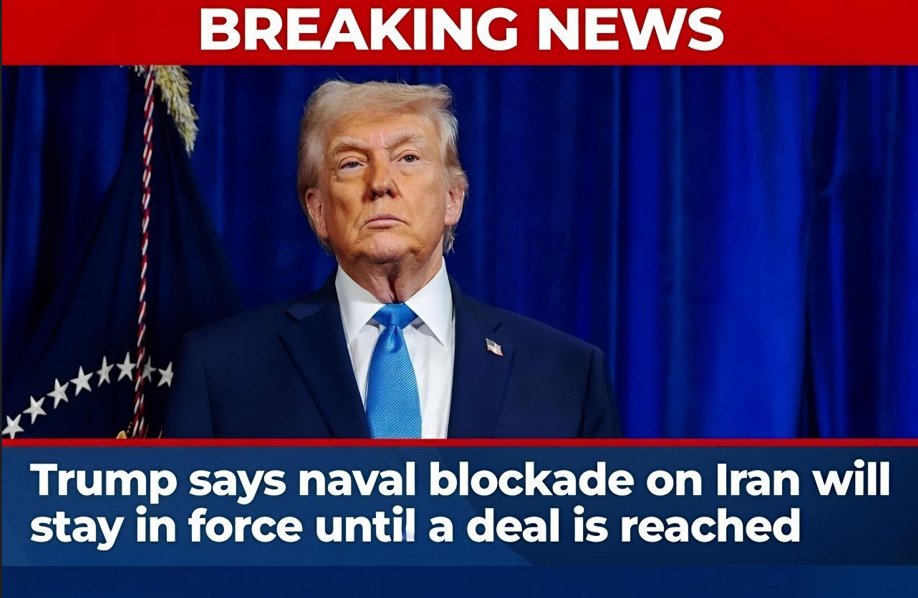
U.S. President Donald Trump has reaffirmed that the naval blockade on Iran will remain fully in force until a comprehensive agreement is reached with Tehran, underscoring Washington’s strategy of sustained pressure amid ongoing tensions in the Middle East. The blockade, which targets ships entering or leaving Iranian ports, was imposed after recent negotiations between the two sides failed to produce a lasting deal.
Trump made clear that the measure is not temporary, emphasizing that it will continue until negotiations are “100% complete.” His remarks signal that the United States is unwilling to ease restrictions without concrete commitments from Iran, particularly on key issues such as security, regional stability, and broader diplomatic terms.
The announcement comes at a delicate moment, as a ceasefire linked to the Israel-Lebanon conflict has led to the reopening of the Strait of Hormuz, a critical global shipping route. While commercial vessels are now able to pass through the strait, the U.S. blockade remains specifically focused on Iran, creating a situation where general maritime traffic can resume but Iranian trade continues to face strict limitations.
This dual-track approach highlights Washington’s attempt to balance global economic stability with geopolitical leverage. The reopening of Hormuz has already contributed to easing oil market pressures, yet the continued blockade ensures that Iran remains economically constrained.
Overall, Trump’s stance reflects a broader effort to force Iran back to the negotiating table under stronger terms. However, the ongoing blockade also risks prolonging tensions, as its success ultimately depends on whether both sides can reach a mutually acceptable and lasting agreement.