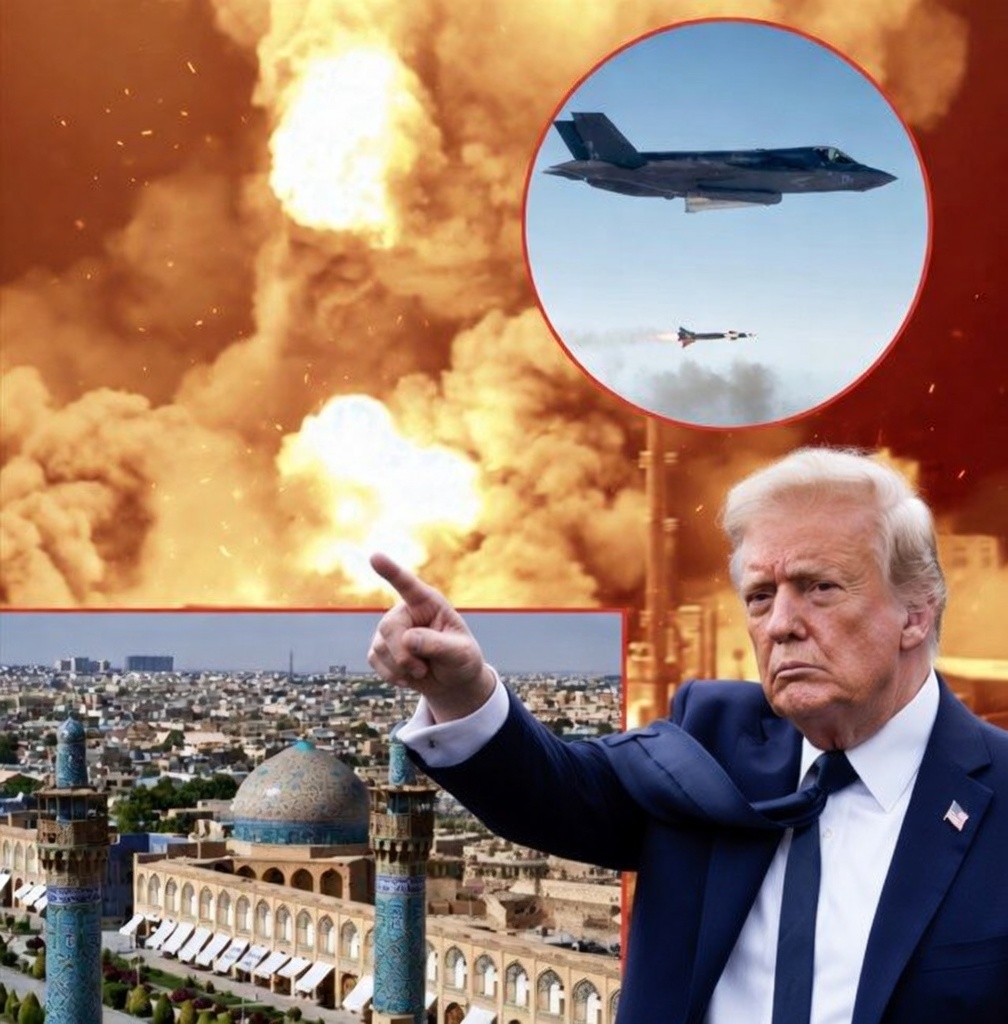
On June 21, Donald Trump announced that the United States had carried out coordinated airstrikes on three major nuclear facilities in Iran—Fordow, Natanz, and Esfahan—marking a significant escalation in regional tensions. In a social media post, Trump described the operation as “very successful,” stating that a full payload of bombs had been dropped on the primary site at Fordow and that all U.S. aircraft had safely exited Iranian airspace.
Trump praised the U.S. military, emphasizing its capabilities and asserting that no other force in the world could have executed such an operation. He also signaled a desire to de-escalate tensions, declaring, “Now is the time for peace,” and announced plans to address the nation later that evening to provide further details.
The strikes come amid rising conflict in the region, following earlier military action by Benjamin Netanyahu, who confirmed that Israel had launched attacks targeting Iran’s nuclear and missile infrastructure. According to Netanyahu, those operations were intended to weaken Iran’s nuclear enrichment capabilities and disrupt its weapons development programs, including efforts linked to key scientists.
In the days leading up to the U.S. strikes, Israel and Iran had engaged in escalating exchanges of missiles and drone attacks, intensifying fears of a broader regional war. Trump had previously remained ambiguous about potential U.S. involvement, stating in an interview that he might or might not take military action.
The reported U.S. airstrikes represent a major turning point in the conflict, with potentially wide-ranging geopolitical consequences. As tensions continue to rise, global attention is focused on how Iran and other regional and international actors will respond, and whether further escalation can be avoided.