Trump Tells CNN He Wants Network to Follow a “Normal Path” During Graham Tribute…
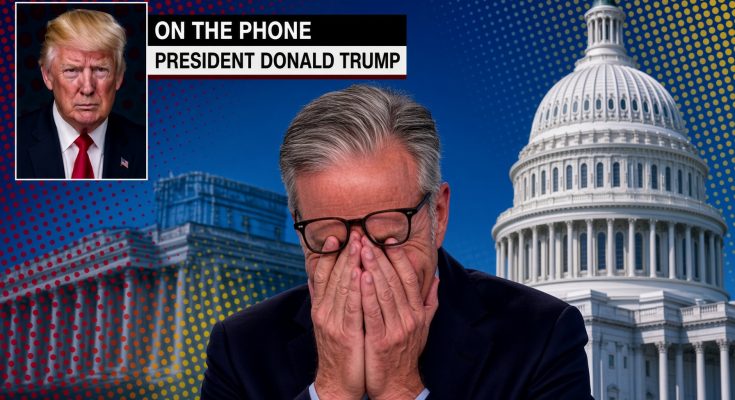
WASHINGTON — President Donald Trump made an unusual appearance on CNN on July 12, 2026, calling into State of the Union to pay tribute to the late Sen. Lindsey Graham before ending the brief conversation with an unexpected comment about the network’s direction.
The exchange came during a particularly significant period for both Washington and the media industry
Graham, a Republican senator from South Carolina and longtime Trump ally, had died suddenly at age 71 after returning from a trip to Ukraine. Trump described Graham as a close friend and spoke at length about their relationship and the senator’s political career. CNN anchor Jake Tapper conducted the interview, which was initially focused exclusively on Graham. When Tapper attempted to turn the conversation toward escalating tensions involving Iran and the Middle East, Trump declined, saying he wanted to keep the discussion centered on his late friend. The president nevertheless agreed when Tapper invited him to return for a broader interview at another time.
“Sure. We will do that,” Trump said
Then, as the conversation appeared to be ending, Trump added a comment that immediately drew attention. “We’re trying to have CNN go on a normal path. And we will do that,” Trump said.
Tapper responded directly, telling the president, “Well, I’m on a normal path right here, sir, and I appreciate your time.”
“Good. You are,” Trump replied before the call ended. A Brief Exchange With Wider Significance The remarks were notable because Trump has maintained a highly adversarial relationship with CNN for years. The network has frequently been a target of his criticism, while CNN has continued to provide extensive coverage of his presidency and political movement.
Trump did not explain what he meant by moving CNN onto a “normal path
nor did he identify a specific policy, editorial decision or programming change that he wanted to see. As a result, the statement left considerable room for interpretation. For supporters of the president, the comment could be viewed as criticism of the network’s editorial approach. For press-freedom advocates and others concerned about political influence over journalism, the remarks raised questions about the appropriate boundaries between an administration and an independent news organization.
The exchange itself, however, did not establish any government mechanism for controlling CNN’s editorial decisions
The Media Merger Adds Context The timing of Trump’s comments is significant because CNN has undergone a major corporate transition. In June, the U. S. Justice Department announced that its Antitrust Division had completed its investigation of Paramount Skydance’s proposed acquisition of Warner Bros. Discovery. The department concluded that the transaction was not likely to harm competition or American consumers in several major markets.
The transaction was valued at approximately $110 billion and brought together major entertainment and news assets, including CNN and CBS News
By October, the transaction had been completed, creating a new media company operating under the Skydance name. The combined company now controls a vast collection of film, television, streaming and news properties, including CNN, CBS News, Paramount+ and HBO Max. The merger has generated considerable discussion about media consolidation and the future independence of the news organizations under the new corporate structure.
David Ellison, who leads the new company, has pledged to preserve editorial independence at CNN
The company has also established a News Editorial Independence Board as part of arrangements surrounding the transaction. CNN’s Position in the New Media Landscape The corporate changes have placed CNN in a new environment at the same time that the network continues to face intense political scrutiny. CNN remains a major international news organization, with extensive television, digital and global operations. Its relationship with political figures—including presidents and congressional leaders—has often been contentious, particularly during periods of heightened partisan division.
Despite years of criticism, the president chose CNN to discuss the death of a prominent political ally
Trump’s decision to call into CNN for the Graham tribute nevertheless demonstrated the continuing importance of the network as a platform for reaching a national audience. The network, meanwhile, carried the president’s remarks live as part of its coverage of Graham’s death. That unusual interaction illustrated the complicated relationship between political power and the news media: public officials may criticize a network while simultaneously using its audience and reach when circumstances demand it.
Graham’s Death Sets the Context The interview itself was prompted by Graham’s sudden death
CNN’s coverage described Graham as a major figure in American foreign policy and highlighted his transformation from an early Trump critic into one of the president’s strongest Senate allies. Graham had once sharply criticized Trump during the 2016 presidential campaign but later became a prominent supporter and described himself as Trump’s “North Star” in the Senate. His death therefore carried significance well beyond his home state of South Carolina, particularly because of his role in Republican foreign-policy debates and his relationship with Trump.
For several minutes, the CNN interview focused on that legacy rather than the broader political disputes surrounding the president and the network
Yet Trump’s final remarks ensured that the conversation became a story about CNN itself. A New Chapter The July exchange did not announce a formal policy toward CNN, nor did it establish any direct government authority over the network’s editorial operations.
Instead, it offered a brief glimpse into an increasingly complicated relationship involving a president, a major news organization and a newly transformed media conglomerate
With CNN now operating under new corporate ownership, questions about editorial independence, political pressure and media consolidation are likely to remain part of the broader national conversation. For Trump, the brief call demonstrated that even after years of public criticism, CNN remains an important avenue for communicating with Americans.
For the network, Trump’s unexpected closing remark underscored the continuing political attention surrounding its journalism and corporate future
What exactly the president meant by a “normal path” remains open to interpretation. What is clear is that a few seconds at the end of a conversation about Lindsey Graham produced a much larger discussion about the relationship between the White House, political power and one of America’s most prominent news organizations.