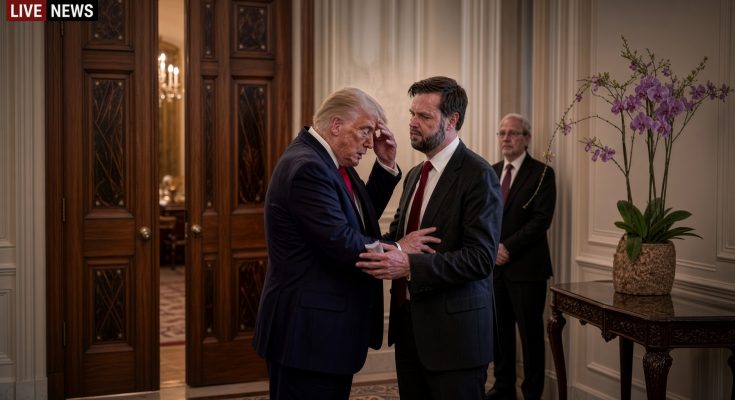
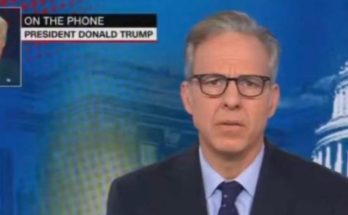
WASHINGTON — A wave of fabricated, high-velocity social media posts alleging that President Donald Trump was shot in the nation’s capital surged across digital networks, triggering alarms among disinformation researchers and prompting federal officials to reiterate that no such attack occurred.
The Anatomy of an Algorithmic Ambush The circulating claims employed standard hallmarks of engineered engagement farming
The claims, which saturated algorithmic feeds within minutes, presented an alarming narrative of a shooting unfolding in real time outside an executive motorcade corridor. However, an exhaustive review of federal law enforcement records, District of Columbia emergency dispatches, and traveling press pool feeds confirmed that the narrative is entirely unfounded. Neither the U. S. Secret Service, the White House Press Office, the Metropolitan Police Department, nor accredited national newsrooms reported any gunfire, medical evacuation, or protective lock-down associated with the president. Posts were published under urgent banners declaring an attack had occurred “minutes ago,” a psychological lever engineered to exploit user shock and bypass critical verification before readers share the content.
Within hours, algorithmic recommendation systems rewarded the visceral framing, generating millions of digital impressions across multiple platforms
In several instances, the claims were paired with out-of-context video fragments showing flashing emergency lights, congested traffic, and generic tactical police movements around federal office complexes—mundane elements of routine capital security operations repackaged as an active crisis. Media literacy analysts noted that the speed of the rumor’s spread demonstrates how modern platform architectures privilege emotional velocity over factual accuracy. “In an information ecosystem built to monetize urgency, an unverified rumor regarding executive assassination travels exponentially faster than the formal denials of law enforcement,” said an independent digital forensic researcher in Washington. “Without an established verification chain—requiring synchronized confirmation from hospital trauma units, federal agencies, and verified pool reporters—these posts function purely as synthetic panics.”
Weaponizing Documented Historical Violence The traction behind the false claim was accelerated by public awareness of genuine historical threats directed at Trump
Most notably, Trump was the target of a confirmed assassination attempt on July 13, 2024, during an outdoor campaign rally in Butler, Pennsylvania. In that incident, an armed assailant, identified by the FBI as Thomas Matthew Crooks, opened fire from an elevated rooftop, grazing Trump’s ear, killing rally attendee Corey Comperatore, and critically injuring two others before a Secret Service counter-sniper neutralized the shooter. The Butler attack generated globally recognizable imagery of a bloodied Trump being swarmed by protective agents on stage. Disinformation monitors observed that bad-faith accounts recycled stills and cropped video frames from the 2024 shooting, presenting historical material as breaking documentation of a fictitious 2026 assault in Washington.
The rumor was further amplified by public confusion surrounding legitimate perimeter incidents around the executive complex
In May 2026, Secret Service officers discharged weapons at an armed individual who approached an exterior White House checkpoint along Pennsylvania Avenue. While that security engagement was thoroughly documented and addressed on the record, official summaries made clear that the suspect was halted at the outer cordon, hundreds of yards from the executive mansion, and posed no direct physical threat to the president. Nevertheless, in an unregulated social media landscape, past physical trauma and peripheral perimeter breaches are frequently conflated to construct an aura of plausibility around complete fabrications. Strict Verification Standards for Executive Crises National security analysts and journalistic organizations adhere to an exacting operational standard when assessing reports of violence involving a sitting commander-in-chief.
None of those operational triggers occurred
Under established protocols, any actual attack triggers immediate, visible institutional reactions: the implementation of Code White executive continuity maneuvers, the scrambling of combat air patrols over the National Capital Region, the activation of military trauma suites at Walter Reed National Military Medical Center, and instant, on-the-record dispatches from the White House protective press pool, which maintains an unbroken visual cordon around the president. The president’s public and private itinerary proceeded without interruption, and federal protective agencies confirmed that all operational units remained on standard posture. The incident underscores the growing hazard of digital media saturation, where unverified claims can mimic the aesthetics of breaking news. Until verifiable documentation, forensic corroboration, or official agency statements substantiate an event, reports alleging violence against the head of state remain malicious digital fiction rather than verified news.