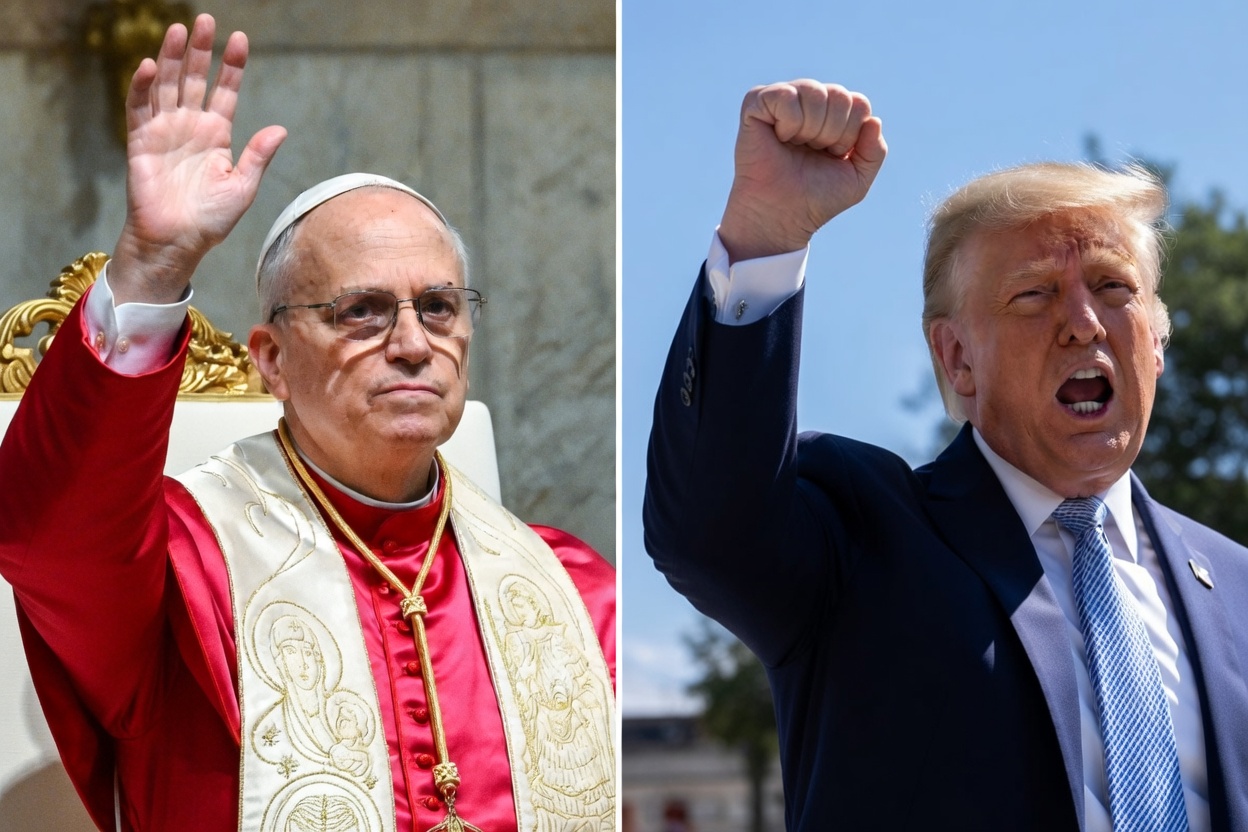
A public dispute has erupted between Donald Trump and Pope Leo XIV, highlighting deep divisions over war, immigration, and moral leadership. The conflict intensified after the pope criticized the U.S.-Israel war involving Iran and warned against using religion to justify violence.
In response, Trump launched a sharp attack on social media, calling the pope “weak on crime” and “terrible for foreign policy.” He criticized Leo’s stance on Iran, arguing he did not want a religious leader who appeared tolerant of Iran obtaining nuclear weapons or who opposed U.S. military actions abroad. Trump also defended his presidency, pointing to what he described as achievements in crime reduction and economic performance.
The remarks followed comments from Pope Leo condemning war and what he described as the moral dangers of power and violence. While he did not mention Trump directly, the pope warned against leaders with “hands full of blood” and emphasized that God should not be invoked to justify conflict. His broader message has consistently focused on peace, diplomacy, and humanitarian concerns.
The clash reflects a wider pattern of tension between the two figures. Pope Leo has previously criticized U.S. policies on immigration and international conflict, urging more humane treatment of migrants and advocating for dialogue over military action. Despite the criticism, the pope has reiterated that his role is spiritual rather than political, centered on promoting peace and justice.
Trump escalated the controversy further by praising the pope’s brother for aligning with his political movement and sharing an AI-generated image depicting himself in a Christ-like role, adding a provocative dimension to the dispute.
Overall, the episode underscores a broader ideological divide—between a political vision emphasizing strength and national security, and a religious message centered on compassion, restraint, and peace—while drawing global attention to the intersection of faith and politics.