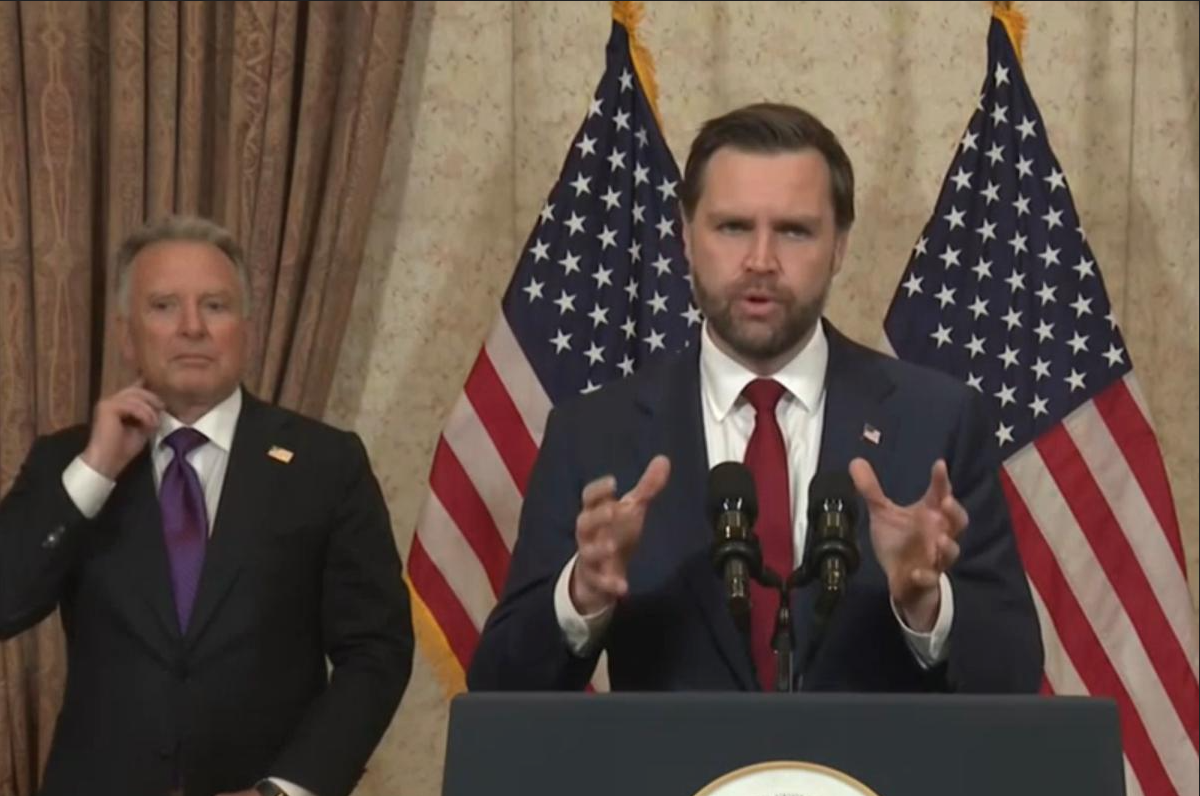
Vice President JD Vance announced that the United States and Iran failed to reach a peace agreement after 21 hours of intense negotiations in Islamabad, Pakistan, aimed at ending a six-week conflict in the Middle East. Speaking to reporters, Vance described the outcome as “bad news,” emphasizing that Iran’s refusal to accept U.S. terms was the primary reason talks broke down. He added that the failure to secure a deal would likely have more serious consequences for Iran than for the United States.
A central issue in the negotiations was Iran’s unwillingness to commit to abandoning its nuclear ambitions. According to Vance, the U.S. demanded a clear and binding assurance that Iran would neither develop a nuclear weapon nor pursue the capability to build one. He stressed that obtaining such an “affirmative commitment” remains a core objective of the U.S. president and a key condition for any agreement.
Despite lengthy discussions, few details about the negotiations were disclosed, leaving significant uncertainty about the future of the conflict. Observers have been left to speculate about whether fighting could resume following the diplomatic setback.
The two sides have remained far apart throughout the negotiation process. Iran has pushed for sweeping concessions, including full sovereignty over the Strait of Hormuz, the right to continue enriching uranium, no restrictions on its ballistic missile program, and reparations for infrastructure damage sustained during the war. These demands have clashed sharply with U.S. priorities, contributing to the stalemate.
With no agreement reached, tensions remain high, and the possibility of renewed conflict continues to loom over the region.